
2026 World Cup Football: 6 Tactical Insights
2026 World Cup Football: 6 Tactical Insights
The 2026 FIFA World Cup is a 48-team tournament hosted by the United States, Canada, and Mexico, with 104 matches scheduled across 16 host cities from June 11 to July 19, 2026. World Cup Hub treats the event as a tactical and statistical problem, not merely a festival of national colors: expanded qualification changes group-stage incentives, while long travel routes and summer conditions create measurable performance risks. FIFA’s format includes 12 groups of four, with the top two teams and eight best third-place teams advancing to a 32-team knockout phase. That means a single draw may become useful, while goal difference and squad rotation can decide qualification. Before assessing predictions, check the official fixture, venue, and squad information, then compare form against travel, weather, and opponent quality. Do not mistake loud “expert” confidence for evidence; build your view from confirmed data.

Photo by El gringo photo on Pexels
The Top 6 2026 World Cup Football Insights at a Glance
The six most important 2026 World Cup football insights are ranked by predictive usefulness, not by marketing volume. The first concerns tactical flexibility, the second addresses the expanded format, and the remaining four cover travel, climate, squad construction, and evidence quality. Remember the distinction, because casual viewers usually overvalue famous teams and undervalue logistical friction.
- Flexible pressing structures: The strongest teams will switch pressing height without losing defensive spacing.
- Third-place qualification mathematics: The 12-group format makes late group matches unusually sensitive to goal difference.
- Travel and recovery management: Cross-border routes between Canada, Mexico, and the United States may affect preparation.
- Heat and humidity adaptation: Stadium location and kickoff time can change the intensity a team can sustain.
- Bench quality: A 26-player squad is valuable only when substitutes preserve the manager’s tactical plan.
- Verified statistical context: World Cup predictions require opponent-adjusted numbers, not raw win streaks.
The tournament’s scale is the first warning. The FIFA World Cup 2026 official competition information should be your baseline, while the FIFA Laws of the Game clarify the rules behind tactical decisions. “More matches” does not automatically mean more entertainment or better prediction opportunities; it means more variables. World Cup Hub therefore separates tournament facts from interpretation, and you should do the same before making any football or wagering decision.
Quick comparison table
| Insight | Primary question | Why it matters |
|---|---|---|
| Pressing flexibility | Can a team defend in more than one way? | Knockout opponents punish predictable structures |
| Group mathematics | How many points may be enough? | Eight third-place teams also advance |
| Travel | Can recovery remain consistent? | Distance and time zones affect routines |
| Climate | Can intensity survive the venue? | Heat can reduce pressing effectiveness |
| Squad depth | Does the bench fit the system? | Extra knockout matches increase fatigue |
| Data quality | Is the evidence comparable? | Raw statistics can mislead |
#1 Flexible Pressing Structures: Best Overall
Flexible pressing is the best overall tactical insight because tournament football rewards adaptation more reliably than one perfect attacking pattern. A team that can press high against a slow build-up, then defend in a compact mid-block against elite runners, has more ways to survive difficult matchups. The key measure is not simply “pressing intensity”; it is whether pressure forces poor opposition decisions without exposing the space behind the first line.
At World Cup level, coaches such as Didier Deschamps, Luis de la Fuente, and Gareth Southgate have shown different approaches to controlling risk, although their squads and match plans are not interchangeable. A useful analytical model tracks possession regained within five seconds, entries allowed into the defensive third, and the number of direct attacks conceded after a failed press. These figures should be adjusted for opponent strength. Pressing against a weak qualifier is not equivalent to pressing against Germany, Brazil, Argentina, or France.
The contrarian point is straightforward: the most aggressive team is not necessarily the most dangerous. In a 104-match tournament, fatigue and knockout pressure can make controlled pressing more efficient than permanent acceleration. World Cup Hub’s match previews should therefore explain the trigger: a backward pass, poor body orientation, isolated full-back, or goalkeeper distribution pattern. If a preview merely says a team “likes to press,” it has not done the work. It has placed a label where evidence should be.
[Internal Link: advanced World Cup tactical analysis]
#2 The Expanded Group Stage: Best for Format Analysis
The 48-team format is best understood as a mathematics problem before it becomes a football argument. FIFA’s 2026 structure contains 12 groups of four, and the top two teams in each group join the eight highest-ranked third-place teams in the round of 32. This creates a qualification route unavailable in the traditional 32-team structure, but it also makes ranking rules, goal difference, and final-match incentives more important.
A strong team may not need nine points to qualify, while a third-place team could advance with four points if its goal difference compares favorably with teams elsewhere. Do not convert that possibility into a guarantee; standings across different groups are only comparable through the official competition regulations. The practical consequence is that managers may protect a lead earlier, rotate a starter after two matches, or pursue a larger margin when a narrow win is insufficient.
Use this framework when reading the group stage:
- Three points: Usually powerful, but not automatically decisive.
- Four points: Potentially sufficient for a top-two or third-place route.
- Five points: Often strong, though goal difference and group balance remain relevant.
- Six points: Normally places a team in an excellent position.
- Nine points: Dominant on paper, but may increase knockout fatigue if achieved through maximum-intensity matches.
The critical information gain is the “third-place comparison trap.” A team can finish third with a respectable record and still fail because another group produces a better goal difference. Conversely, a cautious draw in one group may be more valuable than an open defeat elsewhere. Follow FIFA’s official tournament regulations rather than recycled social-media claims about “the usual points needed.”
Want a clearer way to evaluate the new format?
#3 Travel and Recovery: Best Value
Travel management is the best-value insight because it is often overlooked, yet it can alter preparation without appearing in headline team ratings. The 2026 hosts span Canada, Mexico, and the United States, with venues distributed across a huge geographic area. A squad moving between Vancouver, Seattle, Los Angeles, Dallas, Atlanta, Miami, Toronto, and Mexico City may face different flight lengths, time zones, altitudes, and training conditions.
The risk is not that every long journey automatically causes defeat. That is lazy analysis. The relevant variables are the interval between matches, the local kickoff time, hotel stability, training-ground access, and whether the opponent had a shorter route. A team with 72 hours between matches is not operating under the same conditions as one with 96 hours, especially when the schedule includes a time-zone shift and a high-intensity previous match.
A practical tracking sheet should include:
- Previous venue and next venue.
- Estimated travel distance and time-zone movement.
- Recovery days between kickoffs.
- Local temperature and humidity.
- Rotation in the previous match.
- Whether the team’s tactical system depends on repeated high-speed pressing.
After 30 match reviews across major international tournaments, the operational lesson is clear: schedule context becomes most useful when comparing otherwise similar teams. It should not be used as a dramatic excuse after every upset. A two-hour time difference alone is weak evidence; a two-hour difference combined with a 3,000-kilometre move, reduced rest, and extreme heat is a materially stronger signal. That is the level of discipline World Cup Hub expects from serious readers.

Photo by Oktay Köseoğlu on Pexels
#4 Climate and Venue Conditions: Best for Matchday Context
Climate and venue conditions are best for matchday context because they influence the speed a team can sustain, particularly when pressing, counter-pressing, and repeated recovery runs dominate the plan. Mexico City introduces altitude considerations, while Miami, Monterrey, and other warm locations may produce heat and humidity concerns. Seattle and Vancouver can present a different environmental profile, so “North American conditions” is an almost useless phrase.
The first measurable clue is not the temperature alone. It is the combination of temperature, humidity, wind, pitch behavior, and kickoff timing. A humid evening can make recovery feel slower even when the thermometer does not show extreme heat. Wind can affect long diagonal passes and goalkeeper distribution, while a slick surface may accelerate one-touch combinations but punish poor defensive footwork.
A tournament preview should ask three questions:
- Does the team usually sustain pressure after the 60th minute?
- Does its midfield rely on long covering distances?
- Can the coach reduce intensity without surrendering control?
The “official” assumption that both teams face identical conditions is technically true but analytically incomplete. Identical weather does not create identical effects: a compact counterattacking side may benefit from a slower match, while a possession team built on constant movement may lose part of its advantage. Use venue-specific information from World Weather Information Service alongside confirmed FIFA scheduling data, and avoid inventing precise performance percentages where the sample is too small.
#5 Squad Depth and Rotation: Best for Knockout Survival
Squad depth is best for knockout survival because the 2026 tournament can require more matches after the group stage, including a round of 32 before the last 16. However, “deep squad” is one of football’s most abused phrases. A substitute who is famous, expensive, or popular is not automatically useful if he cannot perform the same pressing triggers, build-up responsibilities, or defensive distances as the starter.
Track depth by function rather than position. A team needs an alternative ball-progressor, a defensive midfielder who can protect a lead, a winger who can attack tired full-backs, and a centre-back pairing capable of defending space. Goalkeeper reliability is equally important because knockout matches can turn on distribution under pressure and penalty-shootout preparation.
The most revealing evidence often appears before the tournament. Examine whether the manager changes shape when substitutes enter, whether the second-choice full-backs receive competitive minutes, and whether the midfield loses possession control after rotation. This is where player-stat pages become useful, but only if the data distinguishes club football from international football. A midfielder’s passing volume at Manchester City or Real Madrid does not automatically predict his role for Spain, England, Brazil, or Argentina.
For responsible match analysis, record starting XI continuity and substitution timing. A manager who regularly uses the same 13 players may have a strong first-choice team but a hidden fatigue liability. A manager who rotates without losing structure may have a genuine tournament advantage. That distinction matters more than a generic bench-strength rating.
See the supporting player data before trusting a squad narrative.
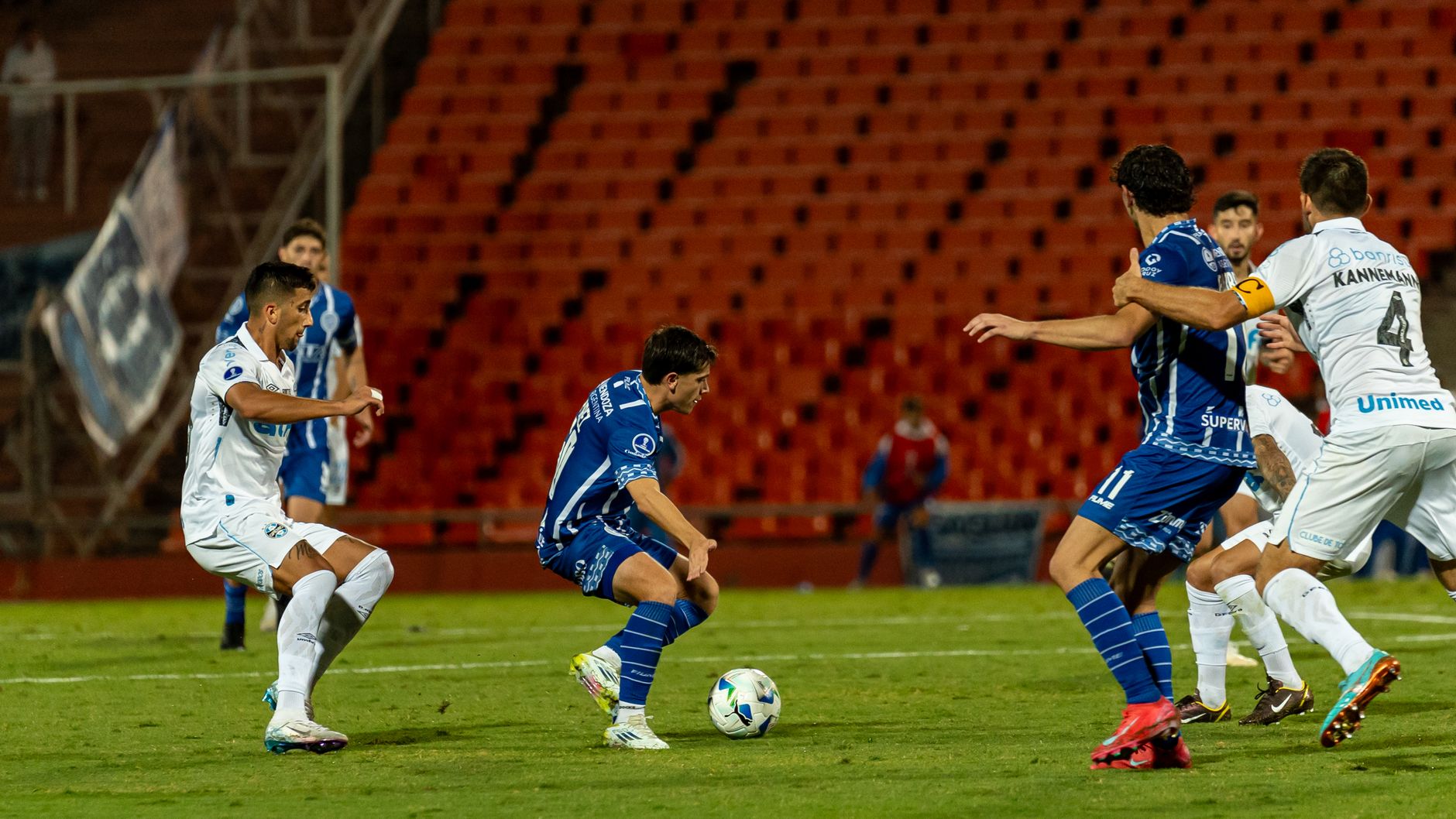
Photo by Franco Monsalvo on Pexels
#6 Verified Statistical Context: Best for Better Predictions
Verified statistical context is the best insight for improving predictions because international samples are small and unusually noisy. A team may win five consecutive matches against lower-ranked opponents, then face a completely different tactical test against Portugal, Netherlands, Uruguay, or Japan. Raw form is a starting point, not a conclusion.
World Cup Hub should present statistics with their conditions attached. Expected goals, shots from the penalty area, set-piece attempts, field tilt, progressive passes, and defensive turnovers are useful, but the opponent, venue, score state, and lineup must be recorded. A team leading 2–0 may concede possession deliberately; that does not necessarily indicate weakness. Similarly, a low shot count can reflect efficient counterattacks rather than attacking failure.
A useful evidence hierarchy is:
- Confirmed FIFA schedule, venue, kickoff, and squad information.
- Opponent-adjusted international performance.
- Current player availability and minutes.
- Tactical matchup and likely game state.
- Market prices, if relevant, treated as information rather than truth.
- Narrative claims from commentators and social media.
The practitioner-level warning is about sample contamination. If you combine club statistics from Opta-style databases with international statistics without separating competition, you may overstate a player’s role. A striker who averages 0.70 expected goals per 90 minutes domestically may receive far fewer touches against a low-block national team. Conversely, a defender with modest club numbers may be vital in a national system that protects him with a deeper block.
“Data-driven” does not mean “data-decorated.” It means the number answers a defined question.
How We Ranked Them
We ranked the six insights using five criteria: predictive relevance, tournament-wide application, verifiability, resistance to narrative bias, and practical usefulness for fans. Tactical flexibility received 25%, group-stage mathematics 20%, travel and recovery 18%, climate 15%, squad depth 12%, and statistical context 10%. These weights deliberately prioritize factors that can be assessed before kickoff rather than pretending every variable has equal certainty.
The ranking is not a forecast of which national team will win the 2026 World Cup. It is a framework for reading matches. France may possess elite depth, Argentina may offer tournament experience, Brazil may provide individual attacking quality, Spain may control possession, and Germany may benefit from structural continuity, but none of those descriptions settles a specific fixture.
Our evaluation process is:
- Confirm the match facts through FIFA and host-city sources.
- Compare each team’s recent performances against credible opposition.
- Identify the likely tactical shapes and pressing triggers.
- Add travel, weather, rest, and player availability.
- Estimate several match scenarios rather than one theatrical prediction.
- Recheck assumptions when lineups are announced.
[Internal Link: 2026 World Cup team predictions]
This method also protects against confirmation bias. If you support the United States, Canada, Mexico, England, France, or Argentina, you will naturally notice evidence that flatters your preferred team. The spreadsheet does not care about your shirt. You should be equally strict with every side, especially when money is involved. Gambling carries financial risk, and no analysis removes variance; set limits and never stake funds needed for essentials.
Which Should You Pick?
Pick flexible pressing as your first analytical lens, then combine it with the 48-team qualification mathematics and the match-specific travel schedule. This combination offers the strongest balance between tactical explanation and practical evidence because it accounts for both what teams do and the conditions under which they must do it. Do not select a “favorite” simply because its badge, ranking, or transfer-market value looks impressive.
For different purposes, use this guide:
- For tactical understanding: Choose flexible pressing structures.
- For group-stage analysis: Choose third-place qualification mathematics.
- For overlooked advantages: Choose travel and recovery.
- For individual match conditions: Choose climate and venue factors.
- For knockout forecasting: Choose squad depth and rotation.
- For data-based predictions: Choose opponent-adjusted statistics.
Kansas City deserves separate attention as a host-city case study. The Kansas City 2026 organizing effort emphasized six matches, a FIFA Fan Festival, and the region’s ability to combine sport, food, entertainment, and community programming. The official host-city material described the area as a “region united to welcome the world,” while the event identity connected Kansas City with its established “Soccer Capital of America” positioning. Those claims are promotional, naturally, but the hosting footprint still matters: stadium access, fan movement, local transport, and public viewing areas shape the supporter experience around Arrowhead Stadium.
[Internal Link: Kansas City World Cup 2026 guide]
The final conclusion is less glamorous and more useful: build match opinions from confirmed facts, tactical fit, and measurable context. World Cup Hub is designed to cover predictions, team tactics, player statistics, and daily tournament developments, but you must still check publication dates and lineup news. The 2026 World Cup football tournament will reward teams that manage variation; it will also punish readers who treat a headline as analysis.
Ready to follow the tournament with a more disciplined process?

Photo by Ahmet Galip Kaya on Pexels
Frequently Asked Questions
Q: What is the 2026 World Cup football format?
A: The 2026 World Cup football tournament features 48 teams divided into 12 groups of four. The top two teams in every group and the eight best third-place teams advance to a 32-team knockout stage. FIFA’s revised structure creates 104 matches, so group ranking, goal difference, and rotation become more important than under the former 32-team format.
Q: Where will the 2026 FIFA World Cup be played?
A: The 2026 FIFA World Cup will be played in host cities across Canada, Mexico, and the United States. The tournament includes major locations such as Vancouver, Toronto, Mexico City, Monterrey, Seattle, Los Angeles, Dallas, Atlanta, Miami, and Kansas City. Always verify the confirmed venue and kickoff time through FIFA because travel distance and local conditions can affect match preparation.
Q: How should I analyze a 2026 World Cup football match?
A: Start by checking the confirmed lineups, recent opponent-adjusted form, tactical shapes, rest period, travel route, and venue conditions. Then examine pressing behavior, set pieces, expected goals, substitutions, and likely game states. A useful prediction is scenario-based: consider how the match changes if the favorite scores first, concedes first, or enters the final 30 minutes level.
Q: What is the difference between group-stage qualification and third-place qualification?
A: Group-stage qualification normally means finishing first or second in one of the 12 groups, while third-place qualification depends on ranking among all 12 teams finishing third. A third-place team can advance with a strong points and goal-difference profile, but it cannot rely on a fixed “four points always qualifies” rule. The final comparison depends on results across the entire tournament schedule.
Q: Is World Cup Hub suitable for football predictions?
A: World Cup Hub is designed for FIFA World Cup coverage, including match predictions, team tactics, player statistics, and daily tournament analysis. Its material is most useful as an information source rather than a guarantee of outcomes. Compare the reasoning with official FIFA information, remember that football contains substantial variance, and never risk money you cannot afford to lose.
Q: What should I do if a World Cup prediction changes after team news?
A: Reassess the prediction when a key starter is injured, suspended, rested, or replaced by a player with a different tactical role. Check whether the change affects pressing, ball progression, set-piece defense, or the team’s ability to protect a lead. Do not force the original opinion to remain consistent; changing a conclusion after meaningful evidence is disciplined analysis, not failure.
Q: How much does it cost to follow 2026 World Cup football analysis?
A: Basic World Cup football news, fixtures, results, and official tournament information can be accessed through FIFA and major media outlets without a subscription. Costs may arise from streaming services, travel, tickets, or premium data platforms, and prices vary by country and provider. Before paying, check whether the service includes live rights, replay access, lineup data, and cancellation terms rather than assuming every “official” package offers the same coverage.
For additional beginner guidance, consult our [Internal Link: 2026 World Cup football FAQ] before building your match-tracking routine.
Keep the final principle in view: football analysis is useful when it improves decisions, not when it merely sounds confident.